Proxemic conservatism
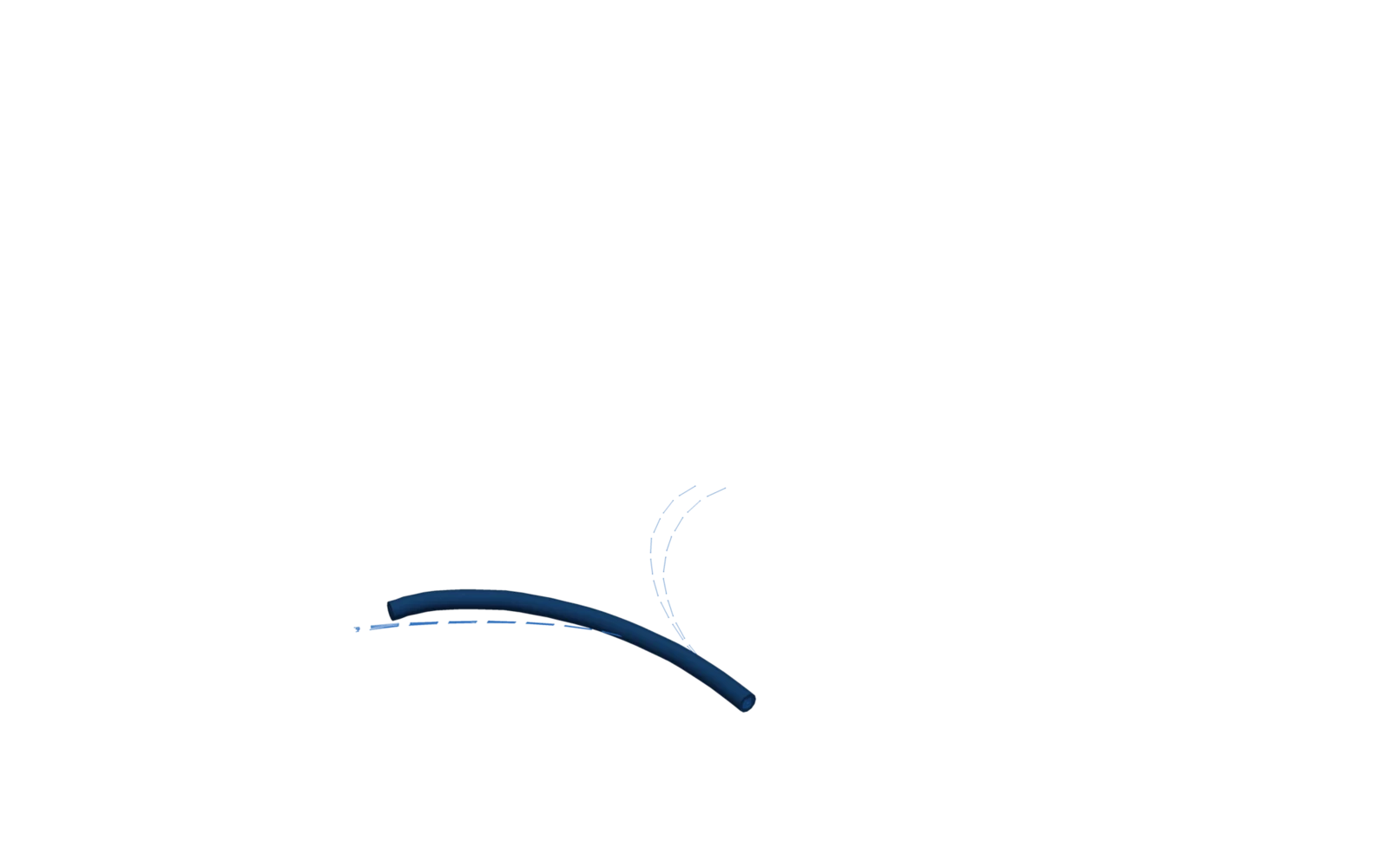
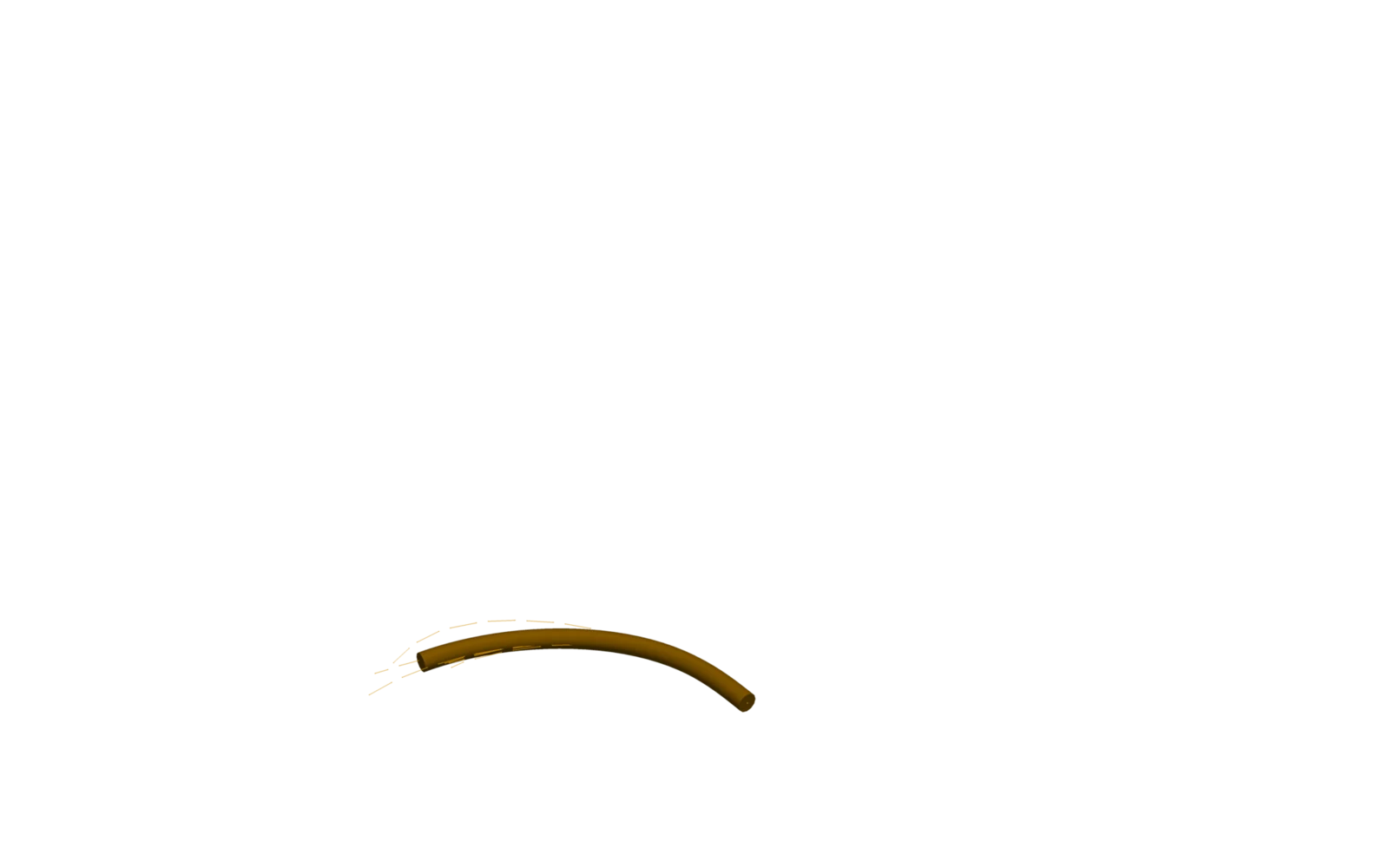
s_proxHow much personal space the robot preserves. Zone radii interpolate between Hall's intimate, personal, and social distances.
−1 tight, efficient lines
Socially competent robot navigation requires more than collision avoidance; it demands adherence to implicit social conventions that vary across contexts, cultures, and deployment requirements. Approaches typically learn a single normative behavior, either through reinforcement learning against a fixed reward function or imitation of human demonstrations, exposing no interface for adjusting that conduct at runtime. We present a diffusion-based navigation framework whose social behavior can be tuned at deployment: a desired style is specified, such as how closely the robot passes, which side it yields to, or how much it defers to groups, and the planner adapts accordingly. Continuous style axes can be followed independently or composed, spanning a behavioral space that discrete, primitive-based specifications cannot express. A feasibility projection layer separates learned social behavior from kinematic feasibility and collision avoidance. A single-axis sweep illustrates a tradeoff curve that strictly dominates fixed-behavior baselines, and stylistic differences are replicated in real-world demonstrations.
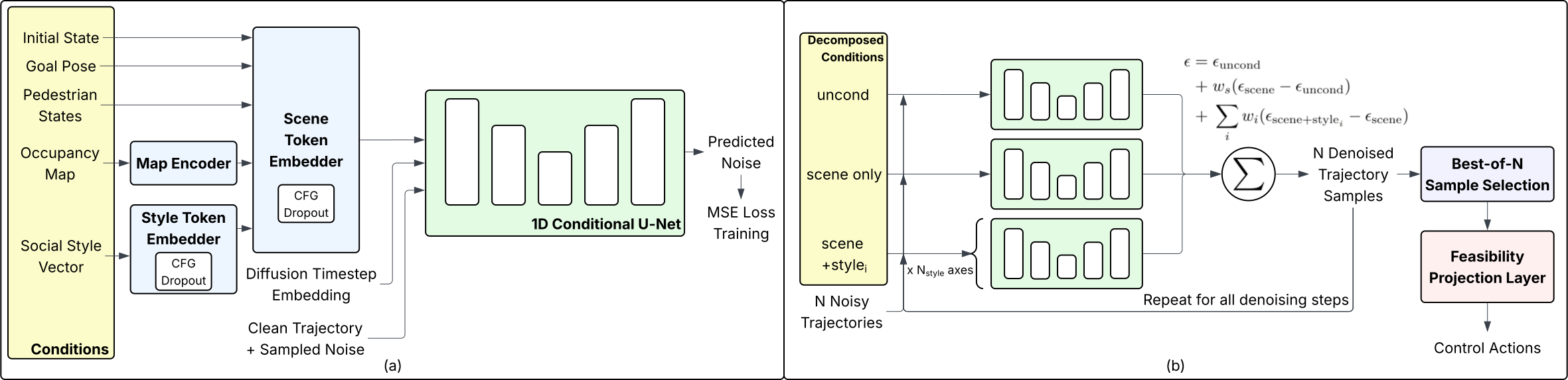
Ten steps, from the inputs the planner receives to the actions it commands.
Conduct is requested as a four-dimensional vector s = [sprox, spass, syield, sgroup], each axis continuous in [-1, +1]. Every axis is grounded in a documented navigation convention, and each is steered by its own guidance weight at inference.
How much personal space the robot preserves. Zone radii interpolate between Hall's intimate, personal, and social distances.
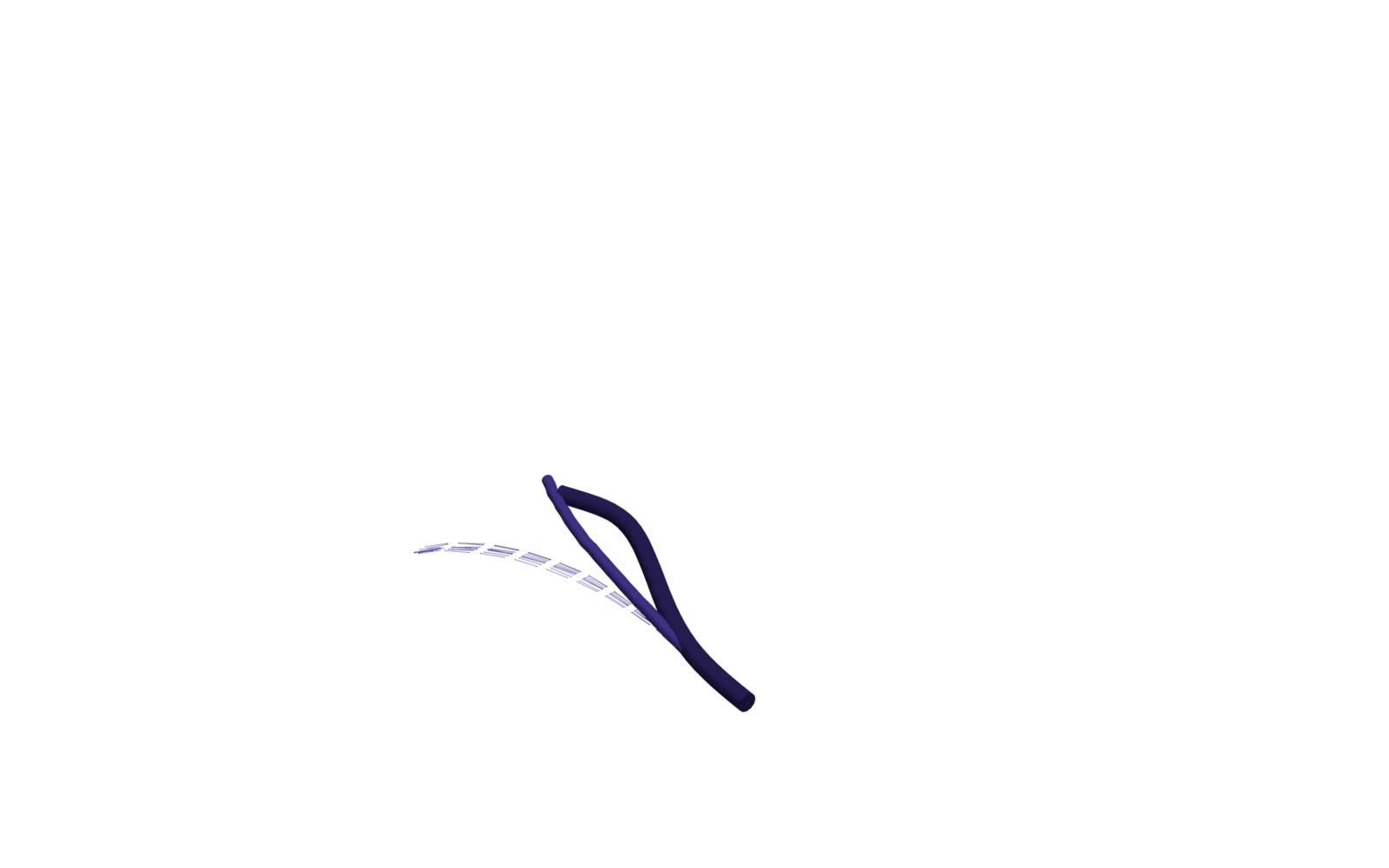
Which side the robot takes when passing or overtaking. The sign selects the convention, and the magnitude sets how firmly it is enforced. The axis therefore reverses cleanly between left- and right-hand traffic regions.
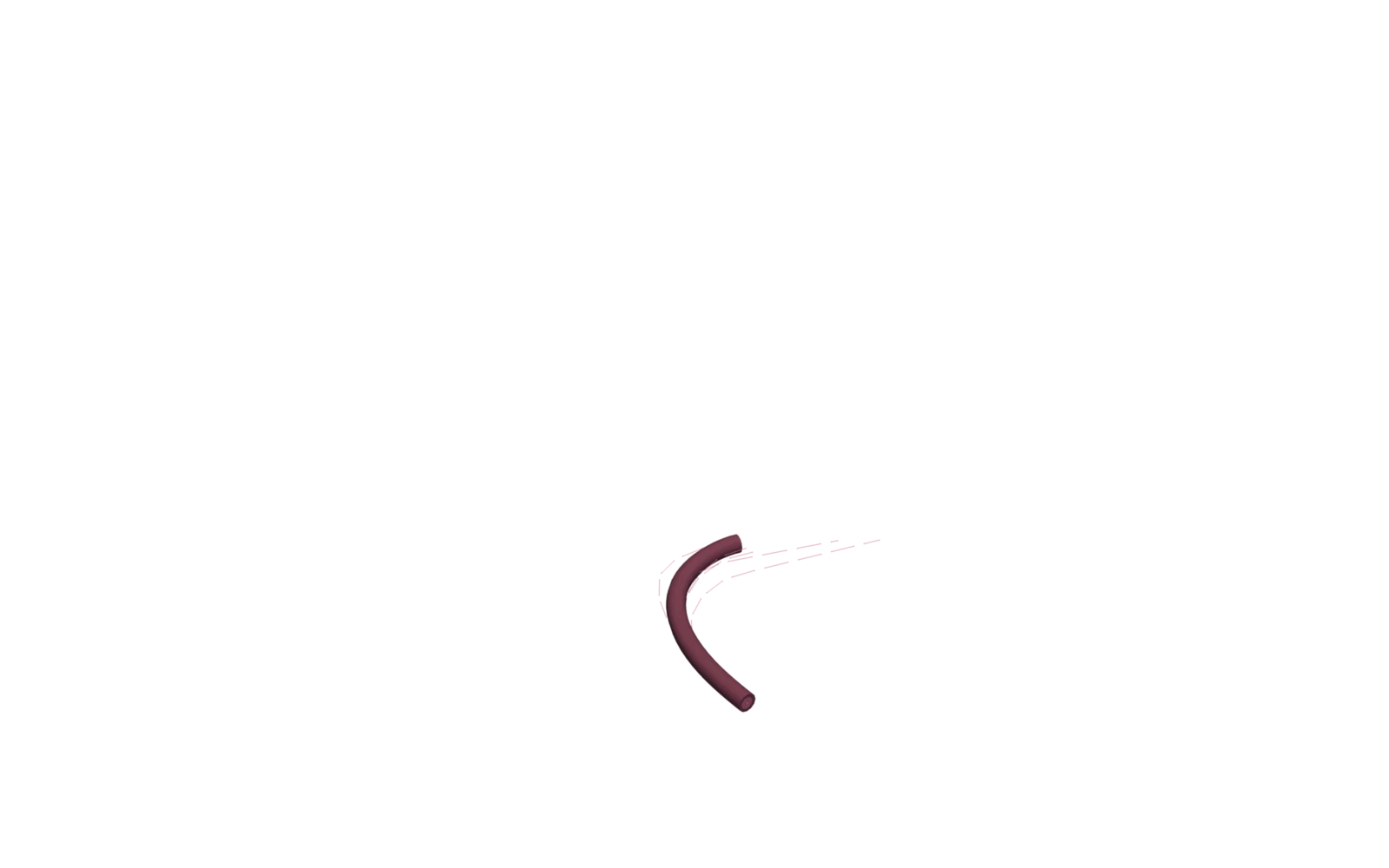
Whether the robot anticipates and defers in oncoming encounters, and whether it is willing to cut across a pedestrian's path. Built on time-to-collision terms following the power-law structure of human avoidance.
Whether the robot routes around co-moving social groups or drives between their members. Lowering the axis narrows what counts as a group at all, while raising it admits wider, more loosely spaced formations and enforces deference to them more strictly.
Five scenes from a randomized evaluation set, where SoGuDiff is run at the neutral style for comparison with ten baseline methods.
Each axis is swept from −1 to +1 with the other three held neutral, on a scenario chosen to isolate that interaction.
Distinct, interpretable behaviors are composed at inference using per-axis guidance.
The reference behavior with every axis at its default convention.
Produces the most assertive path and passes all pedestrians on the left.
Makes the widest arc around all pedestrians, passing on the right side.
Yields to the first pedestrian before cutting through the oncoming social group.
SoGuDiff is deployed on a Clearpath Jackal for real-world demonstrations. Each clip shows the recorded demonstration, human detection via the onboard camera, and logged real-time detection and prediction data.
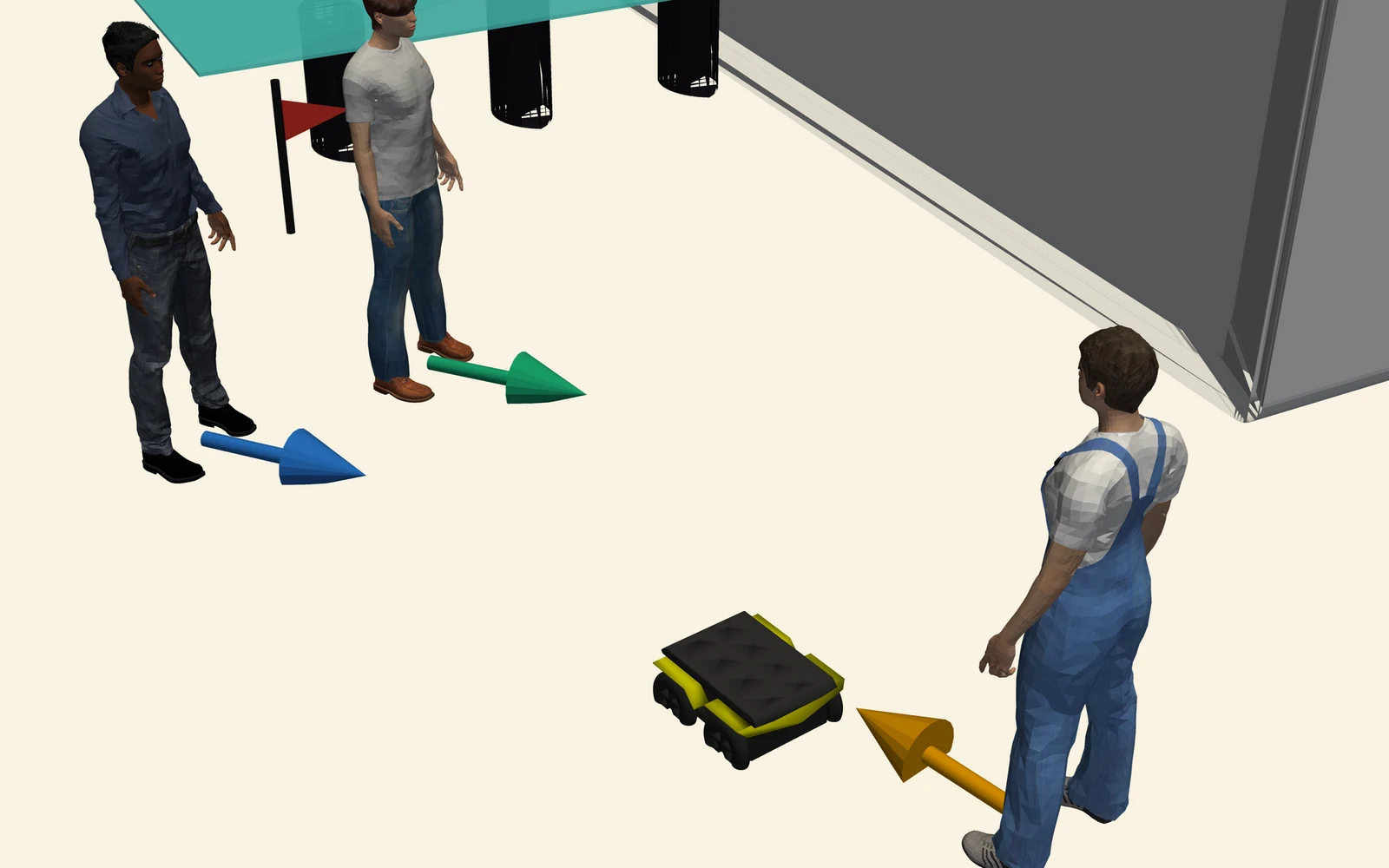
The robot navigates socially in an environment with three pedestrians.
For each axis, the same encounter is repeated using −1 and +1 values.
Proxemic conservatism and passing side, four distinct compositions. On the same encounter, differences in behavior are perceptible across each style.
The style is flipped from left-side passing to right-side passing during the run, changing behavior in real-time.
@misc{schaible2026sogudiffsociallyguideddiffusion,
title={SoGuDiff: Socially Guided Diffusion for Steerable, Norm-Grounded Robot Navigation},
author={Christian Schaible and Haoran Ji and Yash Vardhan Pant and Stephen L. Smith},
year={2026},
eprint={2609.30560},
archivePrefix={arXiv},
primaryClass={cs.RO},
url={https://arxiv.org/abs/2609.30560},
}